Related Books:

1. Transparency, if not objectivity
In December of 2001, I took my mother to see the first Lord of the Rings movie. Though it was my idea to see the film, it was her cash that purchased the ticket, and so she was not only baffled, but also irritated, when I had to leave the theater in tears a couple of minutes before the end credits.
There was some precedent for this; I was the kid who cried at E.T. At Harry and the Hendersons. But I found it impossible to articulate to her, or even to myself, exactly what I found so upsetting about The Fellowship of the Ring’s climactic Hobbit-hunt. Was it the surround-sound thunder of the hordes of orcs? The bloodlust on their faces? The flash of spears through chests, the thwack of axes on armor, the pornography of violence? Or was it the fact of having allowed myself to be transported, for a couple of hours, to Middle Earth, when I’d been trying so hard since September to stay rooted in this one?
In my mother’s car, afterward, I tried to describe what it had been like that morning in Washington. How I’d lingered outside the Kennedy Center a few minutes after the start of business at the dot-com where I was working, drinking in the richness of my coffee and the blueness of the day. How, when the “What-the-f–k?” email from my editor hit my inbox, I felt sure there had been an accident or mistake. How we gathered in the clips room to watch CNN, and how even the atheists among us kept saying “Oh, my God” when the second plane hit. How, when a phoned-in voice reported an explosion at the Pentagon, maybe a quarter-mile from where we stood, it seemed inevitable: everything we’d grown up counting on had ended for good.
I tried to explain what it was like watching the debris cascade off the first flaming tower, telling myself it was helicopters pouring water, as on a forest fire. And then recognizing jumpers. Realizing I was seeing thousands of souls (twenty thousand I thought) being snuffed out. I tried to tell the woman who brought me into the world what it was like to walk home through streets silent save for the cell-phone calls that had made it through, and scanning the skies with a half-million others, convinced we were all about to die. But of course my mom had her own experience, and I couldn’t really put mine into words.
Or maybe I didn’t want to. I still don’t like to talk about it, and I’m afraid as I type these sentences that writing about it, letting it out, will make me forget, or that my cadences will paper over the memories, replace what I felt then with what I know now. I’m terrified to let them go, all the people who died that day. And so I never say the date, or the numbers that have come to stand for it, and I never talk about it.
I guess the strategy is working, because even now sometimes my heart will stop when I hear a plane coming in low overhead, or look out my kitchen window here in Brooklyn and see the towers of light reaching up toward forever. And because when I finished The Looming Tower: Al-Qaeda and the Road to 9/11 last month, I cried as though I was back there in the parking lot of that movie theater. Or back there on the streets of D.C.
2. Looking through the wreckage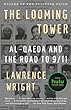 Lawrence Wright’s Pulitzer-Prize winning book, which originated in The New Yorker, unfolds as a series of profiles. Like several other accounts of Al-Qaeda, it locates the origins of Islamist terrorism in an Egyptian writer named Sayyid Qutb. Though far from sympathetic to Qutb, Wright meticulously maps the coordinates of his radicalization: postwar American materialism, Egyptian corruption and repression, and a stern theological literalism. Qutb’s brand of Islamism is not treated as exceptional; rather, it is situated alongside Marxism and other religious fundamentalisms as a response to modernity.
He was opposed not to modern technology but to the worship of science, which he believed had alienated humanity from natural harmony with creation. Only a complete rejection of rationalism and Western values offered the slim hope of the redemption of Islam.
Wright extends the same imaginative inhabitation to each new figure he investigates. Qutb cedes the stage to fellow Egyptian Ayman al-Zawahiri, one the most contemptible people I’ve ever had the misfortune to read about. And Al-Zawahiri gives way to Osama bin Laden (who, intriguingly, is the least interesting figure in the book), and to FBI agent John O’Neill, one of the first Americans to take him seriously.
This character-driven approach has its virtues. Through the figure of Bin Laden, Wright delivers a comprehensive account of the history of modern Saudi Arabia, a culture which went from stallions to F-15s almost literally overnight. The profile of FBI investigator Ali Soufan reminds us of all the values that Qutb missed in his account of liberal democracy. And O’Neill’s story hints none too subtly at the extent of the CIA’s responsibility for the attacks of Sept. 11; the agency appears, however passively, to have shielded Al-Qaeda operatives from the FBI, in hopes of “flipping” one of them. As the book darts back and forth from Tora Bora to Washington, it develops the sickening propulsion of a thriller.
And yet, as Wright’s novelistic talents and exhaustive reportage drive the book forward, the sweeping claims of the title remain unfulfilled. The extent of Al-Qaeda’s activities in post-USSR Afghanistan and Pakistan remain as obscure as its origins in Saudi Arabia and Egypt are clear. And despite bin Laden’s stated agenda, the Israeli-Palestinian conflict, and the history of terrorism associated with it, appear only as tangents to the story Wright wants to tell. Thus his portrayal of Al-Qaeda seems incomplete.
Which doesn’t mean it’s not damning. Al-Qaeda, as The Looming Tower presents it, is a far cry from Sayyid Qutb’s Islamism. Al-Zawahiri and bin Laden have created neither an intellectual movement nor a political platform nor a set of theological propositions nor a proper ideology. Al-Qaeda is instead a form of nihilist scream therapy, a sexually dysfunctional death-cult. The President’s frequent equation of Islamist terrorism and Nazism comes to seem narrowly accurate; a cloud of Freudian self-hatred envelops the leaders of each group. More broadly, though, the comparison begs the questions that matter. For example: What about all those followers?
3. “No justice, no peace”
In essence, Lawrence Wright has written the definitive Great-Man history of Al-Qaeda, and in so doing has provided a valuable service. We need faces for our evil, as we need them for our grief. But to say of The Looming Tower that there is no better book on Al-Qaeda may be a way of saying that we need more books on Al-Qaeda.
Those books would do well to resist the organization’s skillful manipulations of mass media, which posit bin Laden and al-Zawahiri as world-historical figures. In reality – and I say this with all spleen intended – bin Laden and al-Zawahiri would be nothing more than an inept and morally bankrupt cable-access act, were it not for the legions of young men they and their henchmen have persuaded to die for them. Like Wright, I’m intrigued that these two privileged men would choose to live as outlaw demagogues. But I’m far more interested in the psychology of the converts who end up hijacking planes and blowing up women and children in Baghdad squares… if only because I want to believe they can be reached.
Students of history will remind us that Al-Qaeda has presided over fewer deaths, at this point, than have many heads of state. And were we to succeed in regarding human lives as digits on a printout, removed from context and connection, the events of September 11 might become commensurable with the other tragedies that surround us. But The Looming Tower does demand that we make a distinction…that we rationalists stop imagining that Al-Qaeda can be explained away. According to the book, Al-Qaeda’s ascetics, rejecting Islam’s intellectual and mystical legacies (and thus fully two-thirds of its theological content) have arrived at a hatred of life. I don’t mean “our way of life.” (However serious they may once have been, Al-Qaeda’s political grievances have decayed into afterthoughts). I mean life in all its variety: pleasure, anxiety, grief, frivolity… For bin Laden and Al-Zawahiri, being-in-the-world is some kind of hoax being perpetrated on mankind by a (paradoxically) omniperfect God. It is the duty of the faithful not to be taken in by God’s creation, but rather to reject the world and everything in it, and to kill anyone who gets in the way. This is the farthest mankind can fall.
And so for someone like me, committed to Wittgenstein’s idea that the existence of anything at all is miraculous, The Looming Tower presents a bracing challenge. The malice and madness portrayed in this book aren’t special effects. They’re real, they’re here, and if we value life, we’re going to have to find smarter ways to fight them than conforming to caricatures of Western imperialism, or speechifying mistily about “hearts and minds.” We’re going to have to find a way to be their opposite.