Related Books:



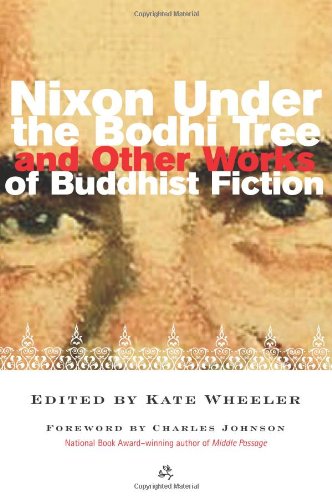


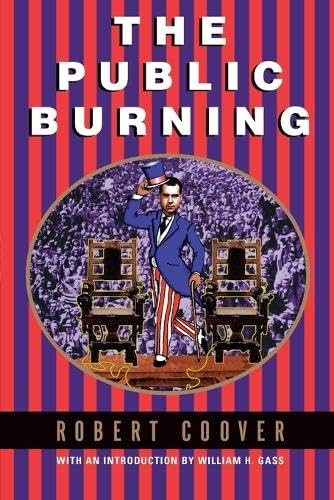
As Peter Morgan’s Frost/Nixon opens on Broadway, I find myself free-associating, as is my habit… in this case, on the subject of presidential fiction.
 Frank Langella, the actor who portrays Nixon in the play, has spoken in several interviews about the odd empathy he feels for our 37th president, who was by all accounts a psychological mess. The closest I’ve ever come to feeling empathy for Nixon was reading Robert Coover’s The Public Burning. Starring Tricky Dick in his vice-presidential incarnation, this novel about the Rosenberg trial is one of the high-water marks of postmodern fiction. Hell, even JFranz likes it. (I’m joking, Mr. Franzen. Joking.) Aside from its idiom, the book’s major achievement is its main character, who grows more ingratiating as he grows more loathsome. Potential libel suits stalled publication, according to the introduction by William H. Gass. We can only be grateful that they did not prevent it.
 Nixon’s belief in history as a pageant starring himself seems crucial to the development of a subgenre I’ve been calling, pace Matthew Sharpe, “historical fantasia.” (See recent works by Mark Binelli, Chris Bachelder, and Lydia Millet, for examples). If The Public Burning is a foundational text, Philip Roth’s Nixon novel Our Gang is a minor addition to the canon. Amusing stuff, and interesting as historical artifact, but inessential. Still, it further expanded the range of approaches the contemporary writer may take to historical figures.
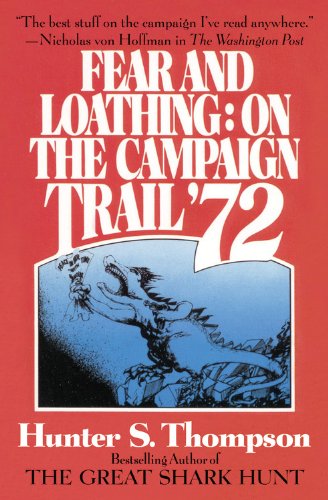
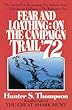 Straddling the line between fiction and journalism, Hunter S. Thompson’s Fear and Loathing: On the Campaign Trail ’72 harnessed a Roth-like fury to a more revealing analysis of the mechanisms of power. On celluloid, Oliver Stone’s Nixon (IMDb) attempted to get behind the mask, with mixed results. More recently, back in the world of letters, Gerald Reilly’s O. Henry Award-winning story “Nixon Under the Bodhi Tree” was said to explore the life of…an actor getting ready to play Nixon. Which brings us full circle to Frost/Nixon.
And what of the other presidents? Gore Vidal had some success with Lincoln, David Foster Wallace notched an early triumph with “Lyndon,” (in Girl with Curious Hair) and DeLillo achieved a then-career-best with his reconstruction of the Kennedy assassination (Libra). I even recall a lovely A.M. Homes story about The Gipper.
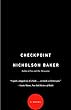 But the cast of characters in what is arguably the worst administration since Nixon’s strikes me as devoid of literary interest. Practically the only enduring contribution of this crew to America’s writers is its patented brand of cant. George Saunders has mastered the idiom. Hart Seely managed to turn Rumsfeld’s arrogant evasions into a book of poems. I myself, if you’ll forgive the plug, published a monologue called “The Love Song of Ari Fleischer” in 2004. But behind the words lurk people who have, for seven years, refused to grant room for ambiguity, complexity, and doubt – preconditions for the moral universe in which modern literature is possible. Instead, we get a stilted reduction whose protagonists, depending on who’s reading, are either simply Good, or simply Wicked. We get Nicholson Baker’s Checkpoint. We get “Stuff Happens” and “Guantanamo” – bracing theatrical experiences, but not dramas per se. A mark of the current administration’s moral failure, and perhaps of its artistic triumph, is that it has sterilized many of the avenues for protest against itself. It brings out the worst in us, and has, by its relentless aestheticization of every aspect of American life, made the aesthetic feel insufficient. Perhaps I’m wrong. Perhaps some artist or press secretary somewhere is even now working up a giant masterwork that illuminates W as a tragic hero caught on the horns of history. Somehow, though, I’m not convinced such a work would ring true. Anyway, I’m not holding my breath.
See Also: HST on the Campaign Trail, Kennedy’s favorite fiction, Clinton’s favorite books.